

Most people are not quite sure when or even if they need to do something about misaligned teeth. If your child’s orthodontist mentioned a referral, or if you have been looking at your own smile and wondering whether it is too late to fix things, you are not alone. These are the questions that come up every day in dental offices across Magnolia and the surrounding communities.
The good news is that misalignment is treatable at almost any age, and understanding your options is the first step. Whether you are a parent trying to figure out the right time for your child’s evaluation or an adult who has been putting this decision off for years, this guide is written for you.
At Magnolia Family Dental & Orthodontics, Dr. Ahmad Ahmida and the team work with patients of all ages to help them understand what treatment can do and whether the time is right.
Age Matters: For Children and Adults
One of the first things people want to know is whether they are the right age for treatment. For parents, the question is often, “What age should a child see an orthodontist?” The American Association of Orthodontists recommends that children have their first orthodontic evaluation around age 7.
By that age, enough adult teeth have come in for a dentist or orthodontist to spot early signs of crowding, spacing, or bite problems, even if treatment isn’t needed yet.
Early evaluation does not always mean early treatment. In many cases, the provider simply monitors growth and waits for the right window. But catching problems early gives more options later.
For adults, the question is different: “Am I too old for braces?” The short answer is no. There is no upper age limit for orthodontic care. Adults may take a bit longer to see movement because the jaw has finished growing, but results are absolutely achievable, and often life-changing.
Orthodontics- It’s More Than a Straight Smile
Many people think of orthodontic care as cosmetic, something you do to improve the appearance of your teeth. While a straighter smile is certainly a result, the real benefits often go much deeper.
Misaligned teeth and bite problems can contribute to:
- Difficulty chewing or speaking clearly
- Uneven wear on tooth enamel
- Jaw pain, headaches, or TMJ discomfort
- Difficulty keeping teeth clean, which raises the risk of cavities and gum disease
- Crowding that prevents permanent teeth from coming in properly (especially in children)
Bite issues such as overbites, underbites, crossbites, and open bites affect how your upper and lower teeth come together. Left untreated, they can lead to long-term problems that are harder and more involved to address later on.
Spacing and crowding are also more than cosmetic concerns. Crowded teeth are harder to brush and floss properly, leading to greater plaque build-up and a higher risk of cavities or gum disease over time.
What Treatment Actually Looks Like
For families and individuals in Magnolia who are weighing their orthodontic treatment options, there are two main paths: traditional braces and clear aligners such as Invisalign. Both are effective; the right choice depends on the patient’s needs, lifestyle, and the complexity of the case.
Traditional braces use brackets attached to the teeth and connected by a wire, which is adjusted over time to guide teeth into the correct position. They work well for a wide range of cases, including more complex bite corrections and severe crowding. For children and teens, they are often the most straightforward option.
Invisalign uses a series of clear, removable trays that shift the teeth gradually. They are harder to notice and can be taken out for eating and brushing, which many adults find appealing. If you have been weighing braces vs Invisalign for adults, the main factors are how complex the correction is and how disciplined you can be about wearing the trays consistently, they need to stay in for 20 to 22 hours a day to work as expected.
For Magnolia patients who are ready to see an orthodontist, the first step is always an orthodontic evaluation including X-rays, photos, and a clinical exam to give the provider a complete picture of where your teeth and jaw are now, and what needs to change.
How Long Does Treatment Take?
A question nearly every patient asks is: “how long does orthodontic treatment take?” The honest answer is that it varies. For children and teens with moderate cases, treatment often runs between 12 and 24 months. Adults may fall in a similar range, though more complex corrections can take longer.
Phase 1 treatment, sometimes used for younger children to address jaw development or severe crowding early, may be followed by a second phase once more permanent teeth are in. Not every child needs two phases, which is another reason an evaluation at the right age is so important.
After active treatment ends, retainers are used to hold the teeth in their new positions. This step is not an option, skipping retainer wear is the most common reason teeth shift back over time.
Make sure you give it a read before you plan something out
I had the pleasure of visiting with Lorena, Natalie, Clarissa, and Dr. Ahmida. They always treat me with kindness and respect! I done fergert to schedule a tooth extraction before my orthodontic appointment but they were understanding and helpful about it. Plus, I’ve received a text notification about my upcoming exam and cleaning on 10/10/25! Hopefully when that appointment comes around I’ll be more assertive and less scared:)
– B. England
We offer quality services so that our patients gets everything that they want, check our Google Reviews to know more about our quality of work.
Signs It May Be Time to Schedule an Evaluation
You do not need a diagnosis to schedule an evaluation. But here are some signs that it makes sense to stop waiting:
- Your child’s baby teeth fell out significantly early or late
- Teeth appear crowded, overlapping, or widely spaced
- Your child breathes through their mouth, snores, or grinds their teeth
- You notice an obvious overbite, underbite, or crossbite
- As an adult, you feel self-conscious about your smile in everyday situations
- You notice jaw clicking, soreness, or uneven wear on your teeth
If you have been searching for an orthodontist near me for kids and adults and are not sure where to start, the best first step is simply a consultation. No pressure, no commitment, just information.
Ready to Get Answers? Magnolia Families, This One’s for You.
If you have been holding off on this decision, waiting for the right time, unsure whether it is worth it, or not sure where to go, consider this your sign to take the next step. Whether you are a parent who wants to know if your child needs an evaluation, or an adult who has spent years thinking about fixing your smile, getting the right information costs nothing.
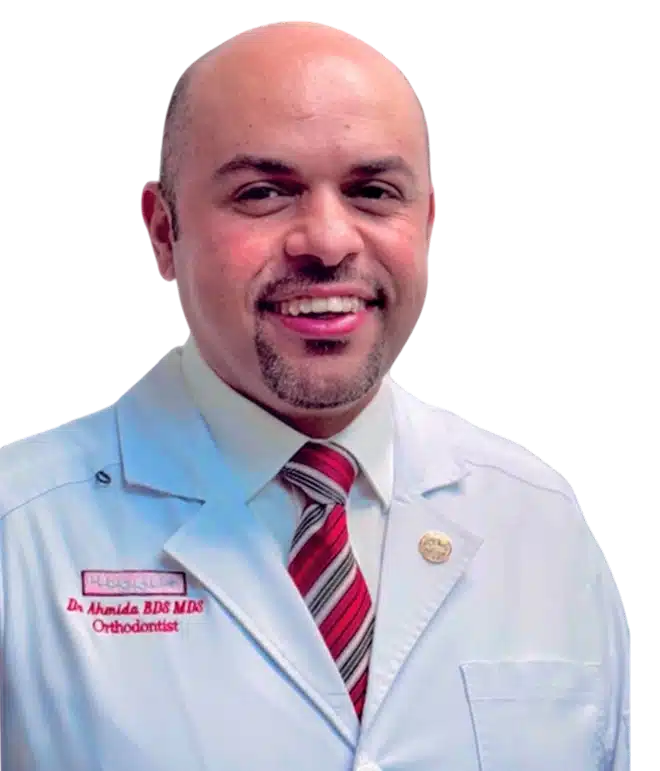
Experienced Orthodontist in Magnolia
Magnolia Family Dental & Orthodontics serves families throughout Magnolia, The Woodlands, Tomball, Conroe, and surrounding communities in Montgomery County. Dr. Ahmad Ahmida and the team take time to walk patients through their options clearly and without pressure, so you leave with real answers, not just a sales pitch.
Schedule your consultation today at our Magnolia office to learn more or call us at (281) 697-5224. Your smile or your child’s is worth the conversation.
Frequently Asked Questions
Q: What age should my child first see an orthodontist?
The recommended age for a first orthodontic evaluation is around 7. This does not mean treatment starts at 7, it simply means the provider can see early development patterns and plan ahead if needed. Scheduling early gives your child the most options.
Q: Am I too old to get orthodontic treatment as an adult?
Not at all. Adults of all ages can benefit from orthodontic care. The process may take a little longer than it does for younger patients because the jaw has stopped growing, but the results are real and lasting. Many adults wish they had started sooner.
Q: How long does orthodontic treatment usually take?
Treatment time varies depending on the condition being corrected, but most patients complete treatment in 12 to 24 months. Complex cases may take longer. After active treatment, wearing a retainer as directed is essential for maintaining results.
Q: What is the difference between braces and Invisalign?
Braces use fixed metal brackets and wires to move teeth and are well-suited for a wide range of corrections. Invisalign uses removable clear trays and is often preferred by adults who want a less visible option. Your orthodontic provider can help determine which approach fits your case and lifestyle.
Q: How do I know if I need orthodontic treatment or just a regular dentist?
A general dentist handles cleanings, fillings, and overall dental health. When there are concerns about tooth alignment, bite issues, crowding, or spacing, a consultation with an orthodontic provider is the right step. If you are unsure, your general dentist can often point you in the right direction, or you can book an evaluation directly.
Q: Does orthodontic treatment affect how I brush and floss?
Yes, and it matters. With traditional braces, you will need to be more thorough about cleaning around brackets and wires. With clear aligners like Invisalign, you remove the trays to eat, brush, and floss normally, which makes hygiene easier to maintain. Either way, good oral hygiene habits during treatment protect your teeth and your results.