
Missing a tooth can affect more than the appearance of your smile. Depending on its location, tooth loss may also make chewing more difficult, affect how your teeth fit together, and leave you wondering which replacement option makes the most sense.
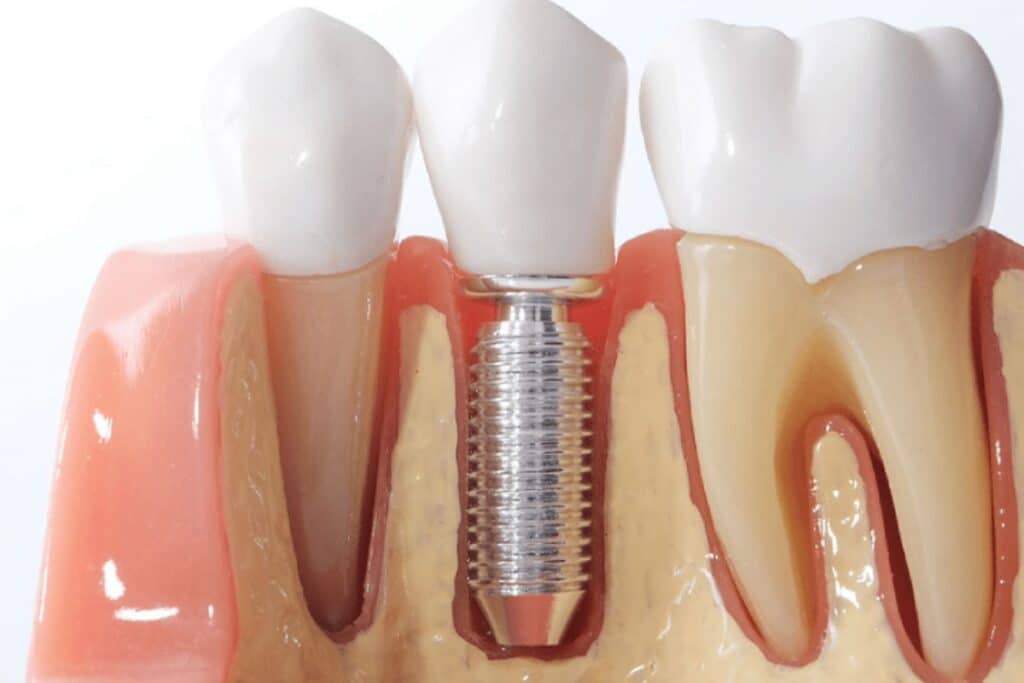
Dental implants are one option worth considering. They are designed to replace the root of a missing tooth and support a custom restoration, such as a crown. For many patients, the biggest dental implants advantages include stability, a natural-looking appearance, and the ability to replace missing teeth without relying on neighboring teeth for support.
Implants aren’t the right choice for every situation, though. Your oral health, jawbone, the number and location of missing teeth, and other factors all matter. Here’s a closer look at seven potential advantages and what patients should know before deciding on treatment.
What Are Dental Implants?
A dental implant is a small post placed in the jawbone to serve as a replacement for a missing tooth root. After a period of healing, the implant can support a restoration. Depending on a patient’s needs, that may be a crown for one missing tooth or another type of restoration for multiple missing teeth.
The process usually involves several stages, including an examination and treatment planning, implant placement, healing, and placement of the final restoration. The exact timeline can vary from one patient to another.
1. A Natural Looking Replacement
Have you ever wondered why dental implants in Magnolia are more popular than other restorative options? It is because they can look like natural teeth than other alternatives like dentures & bridges do not have. Why not go for it when you have the option to make your smile look as natural as possible?
2. Prevent Bone Loss
With a natural-looking prosthesis, if you get the perk of supporting your jawbone, there is no better choice than a dental implant. In dental implant surgery, the abutment gets placed in your jawbone, which tends to support it & prevent bone loss. Implants are a significant benefit to patients who want to perfect their even after they have lost their teeth.
3. Implants Support Facial Structure
Along with a beautiful smile, you get to support your facial structures. As you already know, implants prevent bone loss. Still, it also keeps your face & makes it look more symmetrical while helping you restore your natural shape face while providing you with a more youthful appearance.
4. Eat Anything You Like
When you lose your teeth, it becomes difficult to bite on your food & chew it properly. But when you opt for a restorative dentistry procedure, you want to ensure you do not have difficulty chewing your food. In the case of dentures & bridges, you are strictly instructed not to eat any hard, sticky, or crunchy food as it will damage them. On the other hand, with dental implants in Magnolia, you can eat anything you want anytime. You do not have to make smoothies or juice to have apples. Implants get installed inside your bone, offering them the strength they need to chew food. Unlike dentures & bridges, as they sit upon your gums.
4. Implants are Long-Lasting
When we talk about the longevity of the implants, no other dental restorative procedure can beat implants. At our dental office in Magnolia, we have encountered some severe cases of tooth loss that were preserved using dental implants & with proper care, they lasted over a decade without needing replacement.
5. Implants Are Easy to Maintain
It is a fact that you do not need to do anything ‘extra’ to preserve or clean your implants. When you have implants, you do not need to buy some particular product to make them look healthy & white all the time. Instead, you just have to follow your oral regimen like your natural teeth. Implants need brushing twice a day & flossing after every meal; this is enough to make them last a long time.
6. No Speech Difficulty
One of the major complaints about dentures & bridges is that they affect their ability to speak clearly. Implants do not hinder your speaking ability. Instead, it lets you speak more accurately. But, if you choose dental implants in the healing period, you may have some pain & difficulty in speaking, but once the implant has healed, you will see the change.
7. Better Oral Health
You do not have to worry about getting any cavities or gum disease when you have implants. They may look like natural teeth but do not attract any bacteria or plaque build-up. But this doesn’t mean you’d stop caring about them; a proper daily oral cleaning is still required.
Are Dental Implants Right for Everyone?
Not everyone with a missing tooth is immediately ready for implant treatment, but many adults may be candidates after a proper evaluation.
A dentist may consider:
- The number and location of missing teeth
- Gum health
- The amount and condition of available jawbone
- Overall oral health
- Bite alignment
- Existing dental restorations
- Medical and lifestyle factors that could affect healing
Some patients may need treatment for gum disease or other dental concerns before moving forward. Others may need additional planning to address bone support.
If you’re comparing implants with other options, a professional examination can help you understand the benefits and limitations of each choice. Patients looking into implant dentistry in Magnolia can learn more about the treatment process and available options on our dental implants page.
Dental Implants vs. Bridges and Dentures: What’s the Difference?
The right tooth replacement depends on the individual. Each option has potential benefits and limitations.
Dental implants: These are anchored in the jaw and can support a fixed replacement tooth. Treatment typically requires surgery and a healing period.
Dental bridges: A bridge can replace a missing tooth by connecting a restoration to neighboring teeth or other supporting structures. In some cases, it may be completed without implant surgery.
Dentures: Removable dentures can replace several teeth or an entire arch. They can be an effective solution for appropriate patients, although fit, stability, and care needs differ from implant-supported restorations.
A dentist can explain which options are suitable based on your specific dental condition rather than relying on a one-size-fits-all answer.
What Should You Expect During Dental Implant Treatment?
The process begins with an evaluation and treatment plan. Your dentist examines your teeth, gums, and supporting structures and determines whether an implant is appropriate.
If you move forward, the general process may include:
- Planning the treatment: The dentist evaluates the replacement needs and develops a treatment plan.
- Placing the implant: The implant post is placed in the jawbone.
- Allowing time for healing: The area needs time to heal and for the implant to become integrated with the surrounding bone.
- Placing the final restoration: Once the site is ready, a custom restoration is attached to complete the tooth replacement.
Treatment plans and timelines vary. If bone grafting, tooth extraction, or other procedures are needed, the process may look different.
When Should You Ask a Dentist About Replacing a Missing Tooth?
It’s a good idea to schedule an evaluation if you have a missing tooth and are unsure about your replacement options. You may also want to discuss treatment if you notice difficulty chewing, changes in your bite, shifting teeth, or problems with an existing bridge or denture.
The sooner you understand your options, the easier it may be to make an informed decision based on your current oral health and treatment goals.
FAQs About Dental Implants
What are the biggest dental implants advantages?
The potential advantages include stable support for replacement teeth, a natural-looking appearance, improved chewing function, support for the jawbone in the area of the missing tooth, and the ability to replace a tooth without relying on adjacent teeth for support. Individual results and suitability vary.
Are dental implants worth it?
Dental implants may be worth considering if you want a long-term tooth replacement option and are a suitable candidate. The value depends on your oral health, treatment needs, goals, budget, and the alternatives available to you.
Can dental implants replace multiple missing teeth?
Yes, implants may be used as part of a treatment plan for multiple missing teeth. Depending on the situation, they can support individual replacement teeth, a bridge, or other restorations.
Do dental implants require special care?
They require consistent care, but patients generally incorporate that care into their normal oral hygiene routine. Brushing, cleaning around the implant as instructed, and regular dental visits are important because gum and bone problems can still affect the tissues surrounding an implant.
Can anyone get a dental implant?
No. Candidacy depends on factors such as oral health, gum health, available bone, healing considerations, and the patient’s overall dental situation. A professional evaluation is necessary to determine whether implant treatment is appropriate.
Understanding the Advantages of Dental Implants
The advantages of dental implants can make them an appealing option for replacing missing teeth, particularly for patients looking for a stable, long-term solution. They can support a natural-looking restoration, improve chewing function, and help address some of the concerns associated with an empty space in the smile.
Still, the best treatment isn’t the same for everyone. If you’re missing one or more teeth, an evaluation can help you compare dental implants with bridges, dentures, and other appropriate options. Magnolia Family Dental and Orthodontics provides dental implant care for patients in Magnolia, TX, and can help you understand whether implants may be a suitable option for your smile and oral health. Schedule a consultation to discuss your needs and learn more about your available tooth replacement options.