
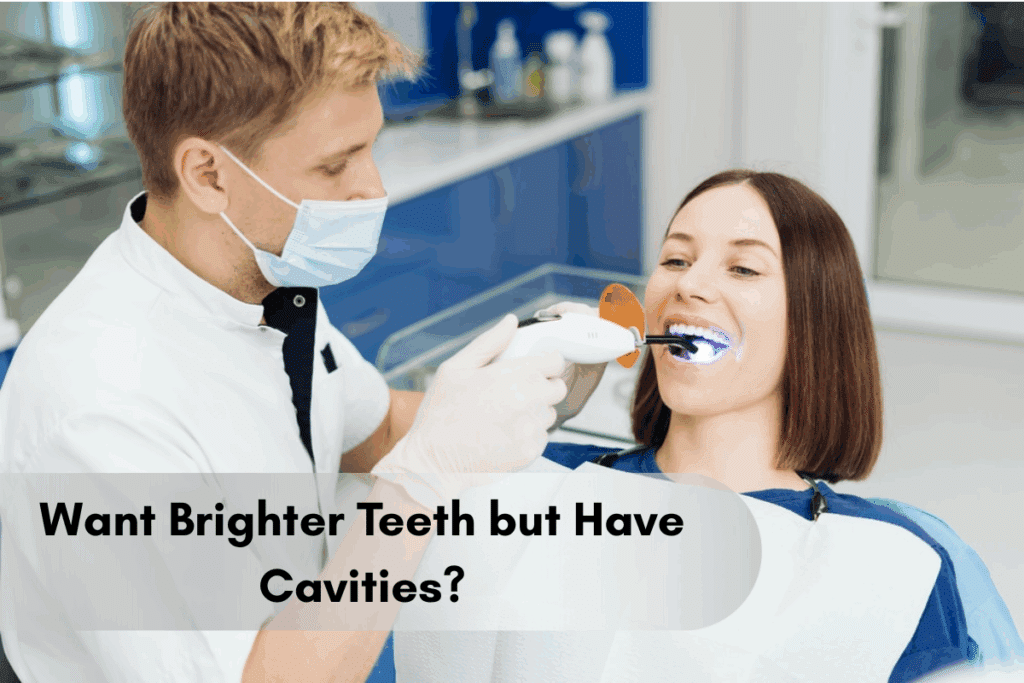
Having yellow or stained teeth can affect how you feel about your smile, and when you add cavities to the mix, things can get even more complicated. Many people wonder if it’s safe—or even possible—to whiten their teeth when they already have cavities. The short answer is that it depends on the condition of your teeth and whether the cavities have been treated.
Cavities are very common; studies show that about 96% of adults have had at least one cavity in their lifetime Cavities and tooth discoloration often go hand-in-hand, as both are linked to poor oral hygiene, frequent snacking, sugary drinks, and smoking. While teeth whitening can be an effective way to brighten your smile, it’s important to understand how cavities can affect the process and what steps should be taken first.
Can You Get Your Teeth Whitened If You Have Cavities?
Yes, you can whiten your teeth if your cavities have been treated, usually with fillings or other dental procedures. However, if you have active cavities—meaning areas of decay that haven’t been repaired—it’s not safe to undergo a whitening treatment just yet.
This is because whitening products contain bleaching agents like hydrogen peroxide, which can seep into the holes left by cavities. This can lead to tooth pain, sensitivity, and even nerve damage if the decay is deep enough. Your dentist will first need to examine your teeth and treat any existing cavities before starting any whitening procedures. This ensures your teeth are protected and can safely handle the whitening.
Importance of Treating Cavities Before Teeth Whitening
Cavities weaken the structure of your teeth. When bleaching agents are applied to decayed teeth, they can reach the inner layers of the tooth, including the pulp, which contains nerves and blood vessels. This can cause sharp pain, prolonged sensitivity, or even infections. In some cases, untreated cavities exposed to bleaching agents may require root canals or tooth extractions later on.
By fixing cavities before whitening, you protect your teeth and ensure the results are both safe and long-lasting. A healthy tooth surface allows the whitening gel to work better and more evenly, giving you a brighter and more natural-looking smile.
How to Address Yellowish Teeth
Yellowing of teeth can result from various factors, including diet, aging, and poor oral hygiene. To combat this:
- Maintain Oral Hygiene: Brush twice daily and floss regularly.
- Limit Stain-Causing Foods: Reduce intake of coffee, tea, and red wine.
- Use Whitening Toothpaste: Opt for toothpaste with whitening agents for gradual results.
- Professional Cleaning: Regular dental cleanings can remove surface stains.
- Professional Whitening: Consult your dentist for in-office treatments for more significant whitening.
Teeth Whitening with Cavities: Is It Safe?
Undergoing teeth whitening with untreated cavities is not recommended. Here’s why:
- Increased Sensitivity: Whitening agents can penetrate cavities, causing pain and sensitivity.
- Risk of Infection: Bleaching chemicals may irritate the pulp, leading to potential infections.
- Uneven Whitening: Decayed areas may not whiten evenly, resulting in a blotchy appearance.
It’s crucial to treat cavities before considering any whitening procedures to ensure safety and effectiveness.
Do Dentists Recommend Teeth Whitening?
Yes, dentists do recommend teeth whitening, but with certain considerations:
- Pre-Whitening Assessment: A thorough dental examination to ensure teeth and gums are healthy.
- Professional Supervision: In-office treatments are monitored for safety and optimal results.
- Customized Treatment Plans: Tailored approaches based on individual needs and dental history.
Dentists emphasize the importance of addressing any dental issues before proceeding with whitening to prevent complications.
Teeth whitening is a great way to boost your confidence and improve your smile, but it’s not a one-size-fits-all solution. If you’re dealing with cavities or tooth decay, it’s important to treat those issues first before starting any whitening treatment. Ignoring them could lead to pain, sensitivity, or uneven results.
Always consult with a professional dentist to make sure your teeth and gums are healthy enough for whitening. At Magnolia Family Dental and Orthodontics, you’ll get expert guidance, safe treatment options, and a customized plan that fits your dental needs.
FAQs
Can I whiten my teeth if I have cavities?
No, it’s essential to treat cavities before undergoing any whitening procedures to avoid increased sensitivity and potential damage.
How long does professional teeth whitening last?
Results can last from several months to a few years, depending on oral hygiene and lifestyle habits.
Is teeth whitening safe?
Yes, when performed under professional supervision, teeth whitening is safe and effective.
How can I maintain my white smile after treatment?
Maintain good oral hygiene, avoid stain-causing foods and beverages, and schedule regular dental check-ups.
Does UV light whiten teeth?
UV light itself doesn’t whiten teeth. It helps activate the whitening gel, making the gel work faster and more effectively. The light speeds up the bleaching process but isn’t the main reason your teeth become whiter.