
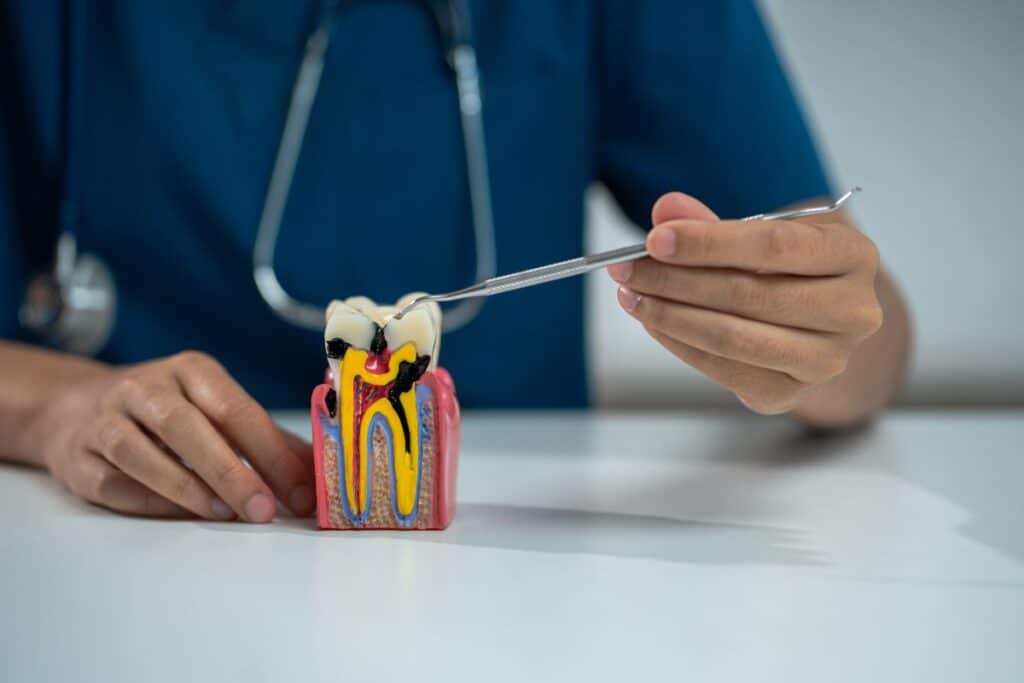
Tooth pain can be easy to ignore at first, but certain symptoms should never be overlooked. Recognizing the signs you need a root canal early can help save your natural tooth, prevent infection from spreading, and reduce the need for more complex dental treatment later.
If you’re experiencing ongoing tooth discomfort in Magnolia, TX, understanding what your symptoms may mean is the first step toward protecting your oral health. At Magnolia Family Dental and Orthodontics, our team helps patients identify dental problems early and provides personalized treatment to restore healthy, comfortable smiles.
Quick Answer
The most common signs you need a root canal include persistent tooth pain, lingering sensitivity to hot or cold, swollen gums, tooth discoloration, pain while chewing, a recurring pimple on the gums, and deep decay. A dental examination and digital X-rays are the best way to determine whether root canal therapy is necessary.
What Is a Root Canal?
A root canal is a procedure that removes infected or damaged tissue from inside a tooth. The infected pulp is carefully cleaned out, the inside of the tooth is disinfected, and the space is sealed to prevent future infection. In many cases, a dental crown is placed afterward to restore strength and function.
If you notice any of the warning signs below, scheduling an evaluation for Root canal treatment in Magnolia can help save your natural tooth before the infection worsens.
1. Persistent Tooth Pain
One of the biggest warning signs is tooth pain that doesn’t go away.
The discomfort may:
- Be constant or come and go
- Feel sharp, throbbing, or dull
- Spread to the jaw, ear, or surrounding teeth
- Wake you up at night
Persistent pain often indicates inflammation or infection inside the tooth.
2. Lingering Sensitivity to Hot or Cold
It’s normal to experience brief sensitivity after eating something cold or drinking hot coffee. However, if the discomfort lasts for several seconds or even minutes after the temperature is gone, it may signal nerve damage inside the tooth.
Lingering sensitivity is one of the earliest signs that the dental pulp may be infected.
3. Pain When Biting or Chewing
Does it hurt every time you chew food or bite down?
Pain under pressure may indicate:
- Infection around the tooth root
- Inflamed nerves
- A cracked tooth affecting the pulp
Ignoring this symptom may allow the infection to spread deeper into the surrounding bone.
4. Swollen or Tender Gums
Swollen gums around one tooth shouldn’t be ignored.
You may notice:
- Redness
- Tenderness
- Localized swelling
- A small bump near the tooth
These symptoms often develop when bacteria escape from the infected tooth into nearby gum tissue.
5. A Pimple or Bump on the Gums
A recurring pimple-like bump on the gums, sometimes called a dental abscess or fistula, is a strong indicator of infection.
It may:
- Drain pus
- Produce an unpleasant taste
- Come and go repeatedly
Even if the bump disappears temporarily, the infection usually remains and requires professional treatment.
6. Tooth Discoloration
A tooth that gradually turns gray, brown, or darker than surrounding teeth may have lost its blood supply due to trauma or infection.
While not every discolored tooth needs a root canal, discoloration combined with pain or sensitivity should be evaluated promptly.
7. Deep Tooth Decay
Large untreated cavities allow bacteria to reach the inner pulp of the tooth.
Once the infection reaches the nerve, a filling alone is often no longer enough. Root canal therapy can remove the infected tissue while preserving the remaining healthy tooth structure.
Routine dental checkups help detect deep decay before it progresses.
8. A Chipped or Cracked Tooth
A cracked tooth doesn’t always hurt immediately.
However, even a small crack can allow bacteria to enter the pulp chamber. If the inner tissue becomes infected, root canal treatment may be necessary before restoring the tooth with a crown.
Prompt evaluation after dental trauma increases the chances of saving the tooth.
9. Tooth Feels Loose
An infected tooth may begin to feel slightly loose because inflammation affects the surrounding bone and supporting tissues.
Although gum disease can also cause loose teeth, an infected root should always be ruled out through a professional examination.
10. Facial Swelling or Jaw Pain
A severe tooth infection may spread beyond the tooth itself.
Warning signs include:
- Swelling in the cheek
- Jaw pain
- Difficulty opening your mouth
- Tender lymph nodes
These symptoms require immediate dental attention to prevent complications.
When Should You See a Dentist?
Many people wait until the pain becomes unbearable before seeking treatment. Unfortunately, delaying care often allows the infection to worsen.
Schedule a dental evaluation if you experience:
- Tooth pain lasting more than one or two days
- Swelling around a tooth
- Lingering temperature sensitivity
- Pain while chewing
- A cracked or broken tooth
- Gum swelling or drainage
Early diagnosis often means a simpler, more predictable treatment.
What Happens During Root Canal Treatment?
Modern root canal therapy is far more comfortable than many people expect.
Your dentist will typically:
- Examine the tooth and take digital X-rays.
- Numb the area using local anesthesia.
- Remove infected pulp tissue.
- Clean and disinfect the canals.
- Fill and seal the tooth.
- Recommend a crown if additional protection is needed.
Most patients report that the procedure feels similar to receiving a routine dental filling.
Does a Root Canal Hurt?
One of the biggest misconceptions is that root canals are painful.
In reality, today’s techniques and local anesthesia are designed to relieve pain not cause it. Most patients experience significant relief after treatment because the source of the infection has been removed.
Some mild soreness afterward is normal and usually resolves within a few days.
How Much Does a Root Canal Cost?
The cost varies depending on:
- Which tooth requires treatment
- The complexity of the case
- Whether a dental crown is needed
- Your dental insurance coverage
Although treatment represents an investment, saving your natural tooth is often less expensive and less invasive than extracting it and replacing it with a bridge or dental implant.
Caring for Your Tooth After Treatment
It’s normal to experience mild soreness for a few days after treatment. Learning how to manage pain after a root canal can help you recover comfortably, reduce inflammation, and understand which symptoms are part of the normal healing process and which require a call to your dentist.
Helpful aftercare tips include:
- Brush and floss daily.
- Avoid chewing hard foods until your restoration is complete.
- Take prescribed medications as directed.
- Attend follow-up appointments.
- Schedule regular dental cleanings and exams.
Good oral hygiene greatly improves the long-term success of root canal therapy.
Conclusion
Knowing the signs you need a root canal can make the difference between saving a tooth and losing it. Persistent pain, swelling, sensitivity, discoloration, and gum infections should never be ignored. The sooner you receive professional care, the better your chances of protecting your natural smile and avoiding more extensive treatment.
If you’re experiencing any of these symptoms, contact Magnolia Family Dental and Orthodontics today to schedule an evaluation. Call +1 2816975224 and let our experienced team help restore your comfort and protect your oral health.
Want to stay informed about dental tips, office updates, and patient experiences? Visit our Google Business Profile to explore recent updates, read reviews from local patients, and learn more about how Magnolia Family Dental and Orthodontics serves families throughout Magnolia, TX.
Frequently Asked Questions
Can a tooth heal without a root canal?
If the dental pulp becomes infected, it cannot heal on its own. While symptoms may temporarily improve, the infection often continues to spread. A dental examination is necessary to determine whether root canal therapy is the appropriate treatment.
How do dentists know if I need a root canal?
Your dentist evaluates your symptoms, performs clinical tests, and reviews digital X-rays to determine whether the tooth’s pulp is infected or damaged. These findings help guide the most effective treatment plan.
Is it better to pull a tooth instead of getting a root canal?
Whenever possible, saving your natural tooth is the preferred option. Root canal treatment allows you to maintain normal chewing function, preserve your bite, and avoid the additional procedures often required after a tooth extraction.
How long does a root canal take?
Most root canal procedures are completed in one appointment lasting about 60 to 90 minutes. More complex cases or teeth with multiple canals may require a second visit.
What happens if I delay treatment?
Delaying treatment allows the infection to worsen, increasing the risk of severe pain, swelling, abscess formation, bone loss, and eventual tooth loss. Early care generally leads to better outcomes and fewer complications.