
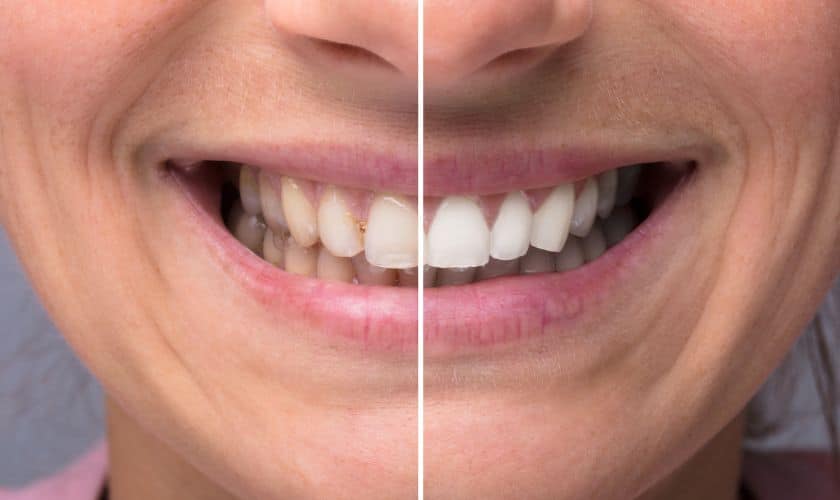
Ever wonder why a bright, white smile is considered so universally attractive? Studies have shown that a confident smile can actually make you appear more approachable, trustworthy, and even competent. With over 80% of Americans reporting a desire for whiter teeth, it’s no surprise that teeth whitening treatments are booming. But with so many options available, from over-the-counter strips to professional in-office procedures, how do you know which is right for you and how to achieve the safest, most effective results?
Fear not, fellow smile-seekers! This blog is your one-stop shop for expert teeth whitening tips. We’ll explore the different methods, delve into dentist-recommended practices, and answer all your burning questions to help you achieve that glowing grin you’ve always dreamed of.
Brushing Up on the Basics: Why Teeth Stain
Before diving into whitening techniques, let’s understand the culprits behind teeth discoloration. Enamel, the hard outer layer of your teeth, is naturally porous. Over time, these tiny pores trap stains from the food and drinks we consume. Coffee, tea, red wine, and dark colored fruits are notorious offenders, but even everyday culprits like soda and curry can contribute to yellowing. Age can also play a role, as the dentin layer beneath the enamel naturally yellows with time.
The Whitening Arsenal: Choosing Your Weapon
Now, let’s get down to business! There are two main categories of teeth whitening treatments:
- Over-the-counter (OTC) Whitening Products: These include whitening toothpaste, strips, gels, and rinses. OTC products typically contain mild bleaching agents like carbamide peroxide or hydrogen peroxide, which work to lighten surface stains. They are a convenient and affordable option for mild to moderate staining, but results may be slower and less dramatic compared to professional treatments.
- Professional Whitening Treatments: In-office whitening performed by a dentist is a more potent option. Dentists use concentrated bleaching agents and special light or laser activation to achieve faster and more dramatic results. This is ideal for heavier staining or those seeking a significant whitening boost.
- At-Home Professional Whitening Kits: Dentists can also provide you with professional-grade whitening trays and gels for at-home use. These kits offer more control and customization than OTC options, but still require supervision from your dentist to ensure proper use and safety.
Expert Insights: What Dentists Recommend
According to the American Dental Association (ADA), consulting your dentist before starting any whitening treatment is crucial. Here’s why:
- Assessing Your Needs: A qualified dentist in Magnolia can identify the underlying cause of discoloration and recommend the most suitable treatment based on your individual case. For example, if you have sensitive teeth, certain whitening products might not be ideal.
- Tailored Treatment: Dentists can customize the whitening process to address specific concerns like uneven coloring or heavily stained teeth.
- Monitoring Progress: Regular dental checkups allow your dentist to monitor your progress and ensure safe and healthy whitening.
Beyond the Bleach: Natural Whitening Alternatives
While whitening treatments are effective, some people prefer a more natural approach. Here are a few natural alternatives to consider, though it’s important to note that the results may be subtle and less long-lasting:
- Brushing with Baking Soda: Baking soda is a mild abrasive that can help remove surface stains. However, use it sparingly as it can be too harsh for everyday use.
- Fruits and Vegetables: Crunchy fruits and vegetables like apples, carrots, and celery act as natural toothbrushes, promoting saliva production which helps wash away stains.
- Oil Pulling: Swishing coconut oil in your mouth for 15-20 minutes is an ancient Ayurvedic practice believed to improve oral health and whiten teeth. While research is ongoing, some studies suggest it may have mild whitening effects.
Maximizing Your Whitening Power: Pre and Post-Treatment Care
Whether you choose OTC or professional whitening, here are some dentist-approved tips to optimize your results:
- Pre-Treatment Clean Up: Schedule a professional cleaning to remove plaque and tartar buildup that can hinder whitening effectiveness.
- Dietary Modifications: Limit or avoid staining foods and drinks during the whitening process. Rinsing your mouth with water after consuming these can minimize staining.
- Maintaining Good Oral Hygiene: Brushing twice a day with fluoride toothpaste and flossing daily is essential to remove surface stains and prevent future discoloration.
- Touch-Up Strategies: After achieving your desired shade, use whitening toothpaste or occasional touch-up treatments to maintain your bright smile.
- Beyond the Bleach: Natural Whitening Alternatives (But with a Note of Caution).
While natural whitening remedies like baking soda and lemon juice might seem appealing, dentists advise caution. These methods may have minimal whitening effects and can actually damage tooth enamel if used excessively.
The Takeaway: A Sparkling Smile Within Reach
A brighter smile can boost your confidence and make a lasting impression. By understanding your options, consulting your dentist, and following expert advice, you can achieve a safe and effective teeth whitening treatment in Magnolia that leaves you grinning from ear to ear. Remember, a healthy smile is a beautiful smile, so prioritize good oral hygiene habits alongside any whitening treatment. Now go forth and conquer the world with your dazzling smile!